
Third-party manufacturing sounds simple: you bring the brand, someone else makes the product. In practice, the agreement you sign decides how well your product, your customers and your reputation are protected. For coconut oil, where the raw material is natural, colour and aroma can vary, and quality depends on the process, a few careful questions up front can save months of trouble.
This guide is for new and growing brands, retailers, distributors and exporters who are comparing manufacturers to make coconut oil for them. The questions apply to any supplier, including us. At Sri Sellandiamman Oil Mill in Muthur, Kangayam, we press, fill and pack under your label, and where it helps we say how we answer each question. Our private label coconut oil page gives the short version.

Generated illustration — not a photograph from the mill.
What third-party manufacturing means for coconut oil
In third-party, or contract, manufacturing, a manufacturer makes a product that is sold under another company's brand. For coconut oil, that usually means one of three things:
the manufacturer presses the oil and fills it into bottles that carry your label;
the manufacturer supplies oil in bulk and you fill and label it yourself; or
a mix of both, such as bottles for retail and larger packs for food-service customers.
Each option has a different minimum, lead time and cost. Before you compare prices, be clear about which one you need.
Ten questions to ask before you sign
Who presses and fills the oil, and where?
Ask for the address of the facility where your oil will be made, not just the address of the office. Ask whether the same company presses the copra and fills the bottles, or whether any step is handled elsewhere. Our oil is pressed at our mill in Muthur, Kangayam, from Kangayam copra, and we welcome visits Monday to Saturday, 8:30 AM to 8:00 PM, Sunday closed.
What licences and certificates does the manufacturer hold?
Ask for copies and numbers, and check them. Ours are FSSAI Central Licence 12414027001281, ISO 9001:2015, ISO 22000:2018, GSTIN 33AYUPS4450N1ZM, IEC AYUPS4450N and Coconut Development Board RCMC No. 20214460. We are also a US FDA registered food facility. Registration with FDA does not mean FDA approval.
How is every batch tested, and will I see the report?
This is the question that matters most. Every batch is lab-tested, with independent NABL-accredited reports from Chennai Mettex Lab Private Limited, and batch documents / CoA shared with your quote or dispatch. Look for independent testing, a batch number you can trace and a document that travels with your consignment. You can read our latest report on the Quality page, and look up a batch on the batch certificate page.
What exactly is in the bottle?
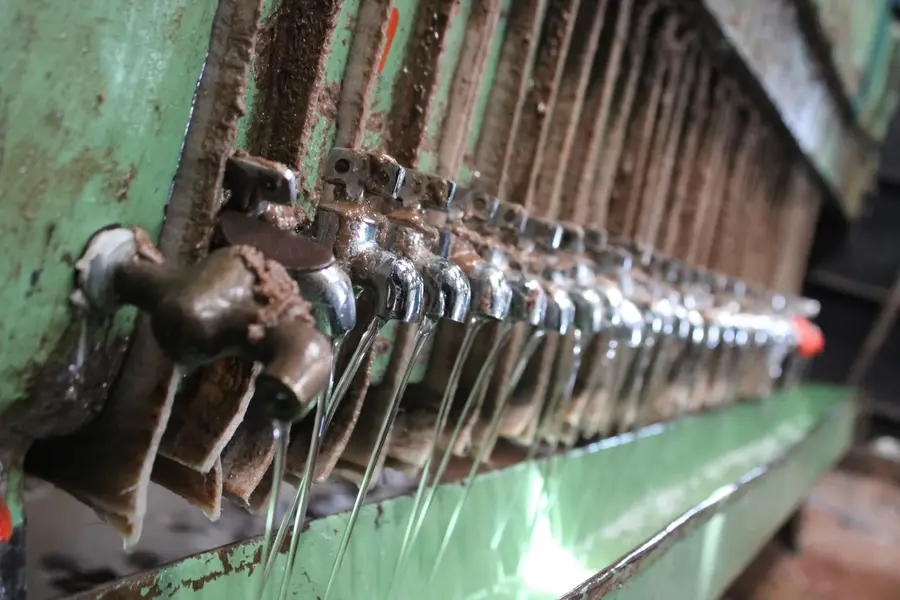
Ask what process makes the oil. Is it cold pressed, solvent extracted or refined? Our oil is pure cold pressed coconut oil: copra dried to about 6% moisture, pressed below 49°C on cold press expellers and filtered in multiple stages down to 1 micron. We do not make refined, bleached and deodorised (RBD) oil. Many private label buyers choose our water-white coconut oil.
Will you approve a sample before the first run?
A sensible agreement starts with a sample you have approved, and sets out that later batches match it. Ask how the manufacturer keeps that standard from batch to batch, and what happens if a batch does not match. Request a sample on our sample page.

Generated illustration — a blank checklist, not a lab report or certificate, and not a photograph from the mill.
What are the minimums, pack sizes and lead times?
Private label minimum run is 500 litres. Packs are 1 L and 500 ml, with 15 kg tins also available, and the lead time is 7 to 10 days. For bulk, B2B orders start at 50 kg, with road tanker 10–35 MT, IBC 1000 litres, 200 kg HDPE barrel or epoxy coated MS drum, 50 kg can, 20 kg can and 15 kg tin. See our packing options.
Can the manufacturer supply steadily?
A launch can go well and then stall if the supplier runs short. Ask about monthly capacity. Our mill presses about 500 MT of Kangayam copra a month, weighs incoming lots on an in-house digital weighbridge, and dispatches bulk orders within 7 working days of confirmation, with road transit of 7 to 10 days.

Who is responsible for the label?
Be explicit. The brand owner is normally responsible for label content and for registrations the business needs. Ask what the manufacturer will do for you: artwork confirmation, labelling requirements, packing instructions. For us, artwork is confirmed with the quote and labelling requirements are discussed when you enquire.
What happens if something goes wrong?
Ask how complaints, returns and replacement are handled, who keeps retained samples, and how quickly the manufacturer can trace a batch. Get the answer in writing, before the first order.
What goes into the written agreement?
Put the important items on paper: specification, pack sizes, minimum quantities, price and payment terms, delivery and risk, documents with each dispatch, how a rejected batch is handled, and how either side can end the arrangement. Confidentiality of your brand and formulation notes belongs on the list too. Ask your own legal adviser to review the final text.
A short checklist before you sign
Visit the facility or ask for a recent walk-through.
Hold a sample you approved and a batch report you have read.
Know the minimum run, pack size and lead time in writing.
Know who is responsible for the label and each registration.
Keep a supplier file with the manufacturer's licences and numbers.
You can read how another buyer group approaches the same supplier checks in our guide for food manufacturers. If you are still deciding between a brand-owned filling line and a contract route, see contract manufacturing vs buying bulk oil.
Frequently asked questions
What is third-party coconut oil manufacturing? It is when a manufacturer makes coconut oil that is sold under another company's brand. At our mill, that means pressing, filling and packing oil under your label in 1 L and 500 ml packs, alongside 15 kg tins.
What is the minimum order for private label? The minimum run is 500 litres, with a lead time of 7 to 10 days.
How do I know the oil is tested? Every batch is lab-tested, with independent NABL-accredited reports from Chennai Mettex Lab Private Limited, and batch documents / CoA shared with your quote or dispatch.
Can I visit before I sign? Yes. Visits are welcome Monday to Saturday, 8:30 AM to 8:00 PM, Sunday closed. Write to manojkumar@srmcoconutoil.com or WhatsApp +91 79040 52374 first.
Do you work with traders and repackers as well as new brands? Yes. Brands, retailers, traders, repackers and brokers are all customers, and each can choose between private label bottles and bulk packs.
Start the conversation
One Mill. One Standard. Every Batch. Send your pack, monthly quantity and brand name on WhatsApp (+91 79040 52374), by email at manojkumar@srmcoconutoil.com, or through our quote form. The full service is described on the private label coconut oil page.